


Busting Reading Myths
As a new school year begins, it's the perfect time to reset expectations and reflect on what truly matters in building strong readers. Misconceptions about reading instruction can hold us (and our students) back. This school year, let's start with what we know works!
Myths about how children learn to read aren't just harmless misunderstandings. They shape lesson plans, materials, and mindsets. But when those myths go unchallenged, students miss out on necessary instruction.

Stay connected with Melissa and Lori!
Myth-Busting Podcast Episodes
This blog spotlights three powerful podcast episodes that will help you bust common myths about teaching reading, determine whether research is truly credible (or not!), and share effective strategies for communicating with caregivers about reading instruction.
Episode 159: Science of Reading or Snake Oil? 🎙️
with Holly Lane
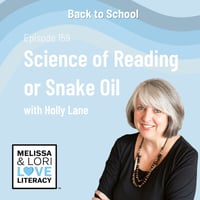 Holly Lane helps teachers sift through the noise when curricula claim to be “based on the Science of Reading.” She demystifies terms like explicit and systematic, underscores why
correlation ≠ causation, and shares how field testing and teacher feedback shape reliable materials. You'll leave with sharper tools to evaluate curriculum claims and a clear sense of when research turns into real classroom impact.
Remember: Look past buzzwords. Demand evidence! Understand how research was done to ensure your reading materials are solid, not just flashy.
Episode 164: Misconceptions About Learning to Read 🎙️
with Carolyn Strom
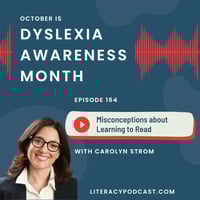 Episode 164 dives into common myths about teaching reading and why they persist. Whether it's the belief that reading "just happens," or that kids should guess approximate words from context, this episode unpacks how these misconceptions undermine structured instruction rooted in the science of reading.
The 3 myths we debunk are:
- Reading Isn’t Natural! It Must Be Taught.
Reading is an invented code and doesn’t develop naturally like speech. Expert Carolyn Strom reminds us that letters are squiggles that must be explicitly taught through structured instruction, decodable texts, and a clear scope and sequence. - We Map Words, We Don’t Memorize Them
Words aren’t stored as whole shapes in memory. Instead, reading is built through mapping - linking the visual form of words to their sounds and meanings. - There’s No Magical “Click” Moment… Practice Matters.
Reading development depends on repeated, engaging practice. Word-games, playful phonemic awareness activities, and routines make practice both effective and fun.
So how can you de-bunk myths about teaching reading?
Even caregivers can feel confused about the best way to teach reading. Many are used to hearing a teacher say, “Your child is at a Level H.” Or "Look at the picture to figure out the word." That’s why it’s so important to communicate with families about how reading instruction today is different from the past. These conversations help them understand what’s happening in the classroom and why instruction looks the way it does.
Episode 161: Communicating with Families About Reading Science 🎙️
with Crystal Lenhart
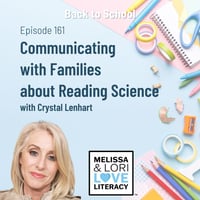 Starting the year, families are important partners. This episode offers ways to bridge the gap between reading research and parent conversations. With our guest Crystal Lenhart, we’ll guide you on translating complex ideas about teaching reading into accessible communication, so families can better understand literacy instruction.
When parents know what real reading science looks like, they become allies in building strong readers.
💥 Ways to Bust Myths in Your School
Curriculum review 📝
Want to vet your materials? Bring Episode 159 to your leadership team and use a curriculum review rubric to evaluate claims and evidence - starting with “explicit” vs. “systematic.”
Family Night Kickoff 🎉
Use the insights from Episode 161 to create a welcoming “Reading Science 101” session for your families. Share a brief audio snippet or use this handout for inspiration to answer common FAQs (Crystal explains it in Episode 161!).
Myth-busting Bulletin Board 📌
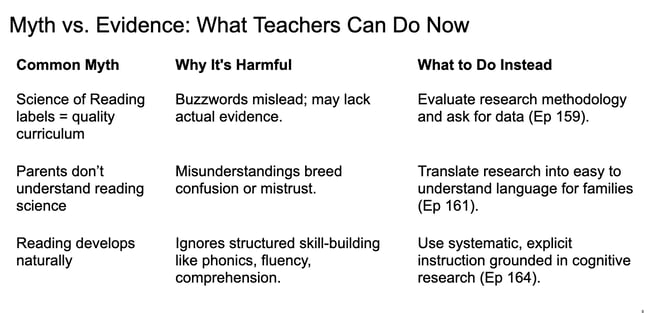
Inspired by Episode 164, create a “Reading Myths vs. Research” display in your teacher break room or intervention space. Use the Myths vs. Evidence chart below for inspo!
Knowledge is Power 🚀
Teaching reading well means staying open, questioning what we’ve always done, and leaning on evidence over tradition. Let’s commit to busting myths, building our knowledge, and sharing it with students, colleagues, and families.
As you step into a new year, lean into these episodes to start strong… and keep asking questions all year long.
📘 For more research-based ways to teach reading, check out our book: The Literacy 50–A Q&A Handbook for Teachers: Real-World Answers to Questions About Reading That Keep You Up at Night
Topics from this blog: Literacy Professional Development Back to School reading Myths Misconceptions


